The 10 SRT Scenarios That Reveal Your True Decision-Making Style
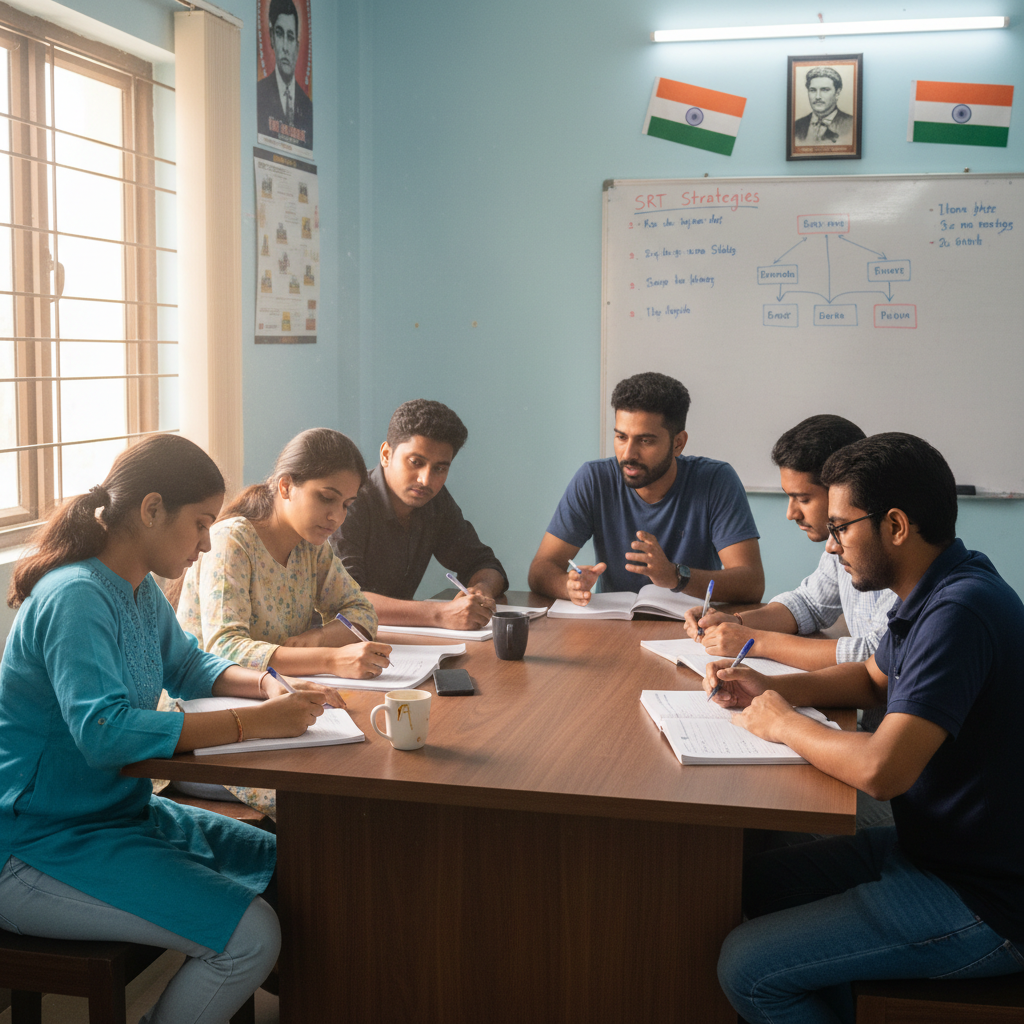
This article dissects ten typical SRT scenarios to help candidates reveal their decision-making styles. Each scenario reflects critical skills necessary for success in the SSB evaluations for the Indian Armed Forces.
The 10 SRT Scenarios That Reveal Your True Decision-Making Style
Introduction
The SRT Situation Reaction Test is a pivotal part of the SSB (Services Selection Board) assessments for candidates aspiring to join the Indian Armed Forces. This test is designed to evaluate your decision-making skills in various situations, highlighting qualities critical for military roles. Understanding the typical scenarios can help you identify your decision-making style and enhance your performance during the recruitment process. For a deeper dive, consider reviewing our guide on SRT: What Your Answers Say About You That You Don't Realize.
What is SRT?
The SRT comprises 60 hypothetical scenarios, each designed to test how candidates respond to real-life problems. These situations challenge your emotional and cognitive capacity, essential for effective functioning in the military. It’s not just about making quick decisions; it’s about making the right ones under pressure. To further understand the types of scenarios you might face, check out SRT Scenarios: 20 Responses Ranked From Rejected to Recommended.
Why It Matters
The SRT is significant for several reasons:
- Evaluates Critical Thinking: Measures how effectively candidates can respond to unpredictable situations.
- Reflects Leadership Qualities: Essential for positions in the Indian Army, Navy, and Air Force where leaders are often required to make quick yet informed decisions. For more on the importance of leadership, see our post on 15 OLQ Signals Assessors Read in You Before You Speak.
- Influences Overall Scoring: Performance in the SRT can significantly sway the final selection results during SSB interviews.
An Analysis of Decision-Making Styles Through SRT
Understanding your decision-making style can enhance your preparation. Here are ten common scenarios found in the SRT:
1. Moral Dilemma
Scenario: You witness your friend cheating during an exam. What do you do?
- Decision-Making Style: Evaluates your ethical decision-making and moral judgment.
2. Crisis Management
Scenario: A teammate is injured during a training exercise. How do you react?
- Decision-Making Style: Tests your crisis management and prioritization of life over task completion. What Assessors Actually Watch During Your GTO Performance can provide insights on handling high-stress situations effectively.
3. Team Conflict
Scenario: Two team members are arguing about a mission approach. What steps do you take?
- Decision-Making Style: Gauges your conflict resolution skills and ability to mediate.
4. Leadership in Uncertainty
Scenario: You're alone in a dangerous situation with no communication. What do you do first?
- Decision-Making Style: Assesses your leadership and resourcefulness under pressure.
5. Adaptability
Scenario: Your plan has gone awry during a mission; how do you proceed?
- Decision-Making Style: Measures your adaptability and innovative thinking to find alternate solutions.
6. Ethical Integrity
Scenario: A superior asks you to overlook a report that highlights a serious mistake. What do you do?
- Decision-Making Style: This examines your commitment to integrity and accountability.
7. Risk Assessment
Scenario: You have to decide whether to evacuate a group from a distressed area or wait for further intel. How do you decide?
- Decision-Making Style: Evaluates your risk assessment skills and ability to weigh consequences.
8. Time-Sensitive Decision
Scenario: You have 15 seconds to choose between two equipment options in a training session. What’s your choice?
- Decision-Making Style: Tests your quick thinking and base knowledge in a high-pressure scenario.
9. Moral Courage
Scenario: Despite the majority's opinion, you believe a course of action is wrong. Do you speak up?
- Decision-Making Style: Gauges your courage to stand for what’s right against peer pressure.
10. Emotional Response
Scenario: You lose your closest ally during a mission. How do you maintain focus?
- Decision-Making Style: Tests your emotional resilience and ability to compartmentalize.
Key Concepts in SRT
- Decision-Making Skills: Ability to make sound judgements quickly.
- Time Management: Staying within a strict time frame of 30 seconds for each scenario.
- Emotional Intelligence: Recognizing how emotions affect decision-making and interpersonal interactions.
Preparation Strategy
To align your decision-making style with the expectations of the SRT:
- Practice Regularly: Familiarizing yourself with different scenarios can help.
- Mock Tests: Participate in timed mock tests to enhance your response speed. Participate in our SSB interview coaching for valuable practice and insights.
- Discuss with Peers: Share insights and approaches with fellow aspirants to broaden your perspective.
Common Mistakes to Avoid
- Overthinking Responses: Stick to your instincts to avoid analysis paralysis.
- Ignoring Emotional Aspects: Consider the emotional implications of scenarios rather than just logical ones.
- Inadequate Practice: Familiarity is crucial; practice various scenarios frequently.
Expert Tips
"Understanding the principles behind your decisions allows you to effectively identify patterns in your responses. Engage with diverse scenarios to enhance your thought process."
Study Plan
Create a structured study plan to maximize your SRT practice:
| Day | Activity |
|---|---|
| Mon | Overview of SRT concepts and decision styles |
| Tue | Practice 10 specific scenarios daily |
| Wed | Analyze group discussions on responses |
| Thu | Conduct a full mock test simulation |
| Fri | Review common mistakes and learning points |
| Sat | Revisit especially tricky scenarios |
| Sun | Reflect on progress and areas for improvement |
Exam Strategy
- Time Management: Limit each response to 30 seconds.
- Stay Calm: Maintain composure while answering.
- Be Authentic: Answer honestly rather than trying to cater to perceived expectations of the assessors.
Key Takeaways
- Understanding and mastering response styles for varied scenarios can reveal a lot about your decision-making capabilities.
- Regular practice and familiarization with common SRT scenarios play a vital role in performance enhancement.
- Emotional intelligence and adaptability are crucial skills that underpin effective decision-making in high-pressure environments.
FAQs
- What is the structure of the SRT?
The test consists of 60 scenarios, with each response limited to 30 seconds. - How are responses evaluated?
They are assessed based on decisiveness, practicality, and alignment with military values. - Can I practice SRT scenarios?
Absolutely! Practicing helps enhance your decision-making speed and effectiveness. - Is there a specific score for passing the SRT?
There's no fixed threshold; it’s comparative. - What types of scenarios are included?
Scenarios can include ethical dilemmas, crisis situations, and team conflicts.
Conclusion
Mastering the SRT Situation Reaction Test can be transformative for defence aspirants aiming for the Indian Armed Forces. Through regular practice and a deep understanding of your decision-making style, you can not only excel in the SRT but also cultivate valuable skills for your career in defense. Stay committed, and remember that every scenario is a step toward your dream career in the military!
For further preparation, check out our resources on NDA coaching, AFCAT exam strategy, and insights on SSB interviews.
📸 Visual Reference

Key Points to Remember
Most Important Topics
Key concepts to master for SRT performance.
Quick Revision Formula
Effective strategies to prepare for quick responses.
Exam Strategy
Tips for managing time and optimizing scores.
Do and Don't
Common practices to enhance decision-making.
Expert Tip
Engage with varied scenarios for broader perspective.
❓ Frequently Asked Questions
🚀 Revision & Motivation

Start Your Defence Journey Today
Mastering the SRT Situation Reaction Test can be pivotal for defence aspirants aiming for the Indian Armed Forces. Consistent practice and understanding of the test structure will not only lead to success in this assessment but also build valuable skills for your future career. Stay motivated, and remember that each scenario is a step closer to your dream career in defence!
Explore the 10 SRT scenarios to understand your decision-making style, crucial for success in SSB evaluations for the Indian Armed Forces.