NDA vs CDS vs AFCAT: The First-Page Google Won't Tell You This
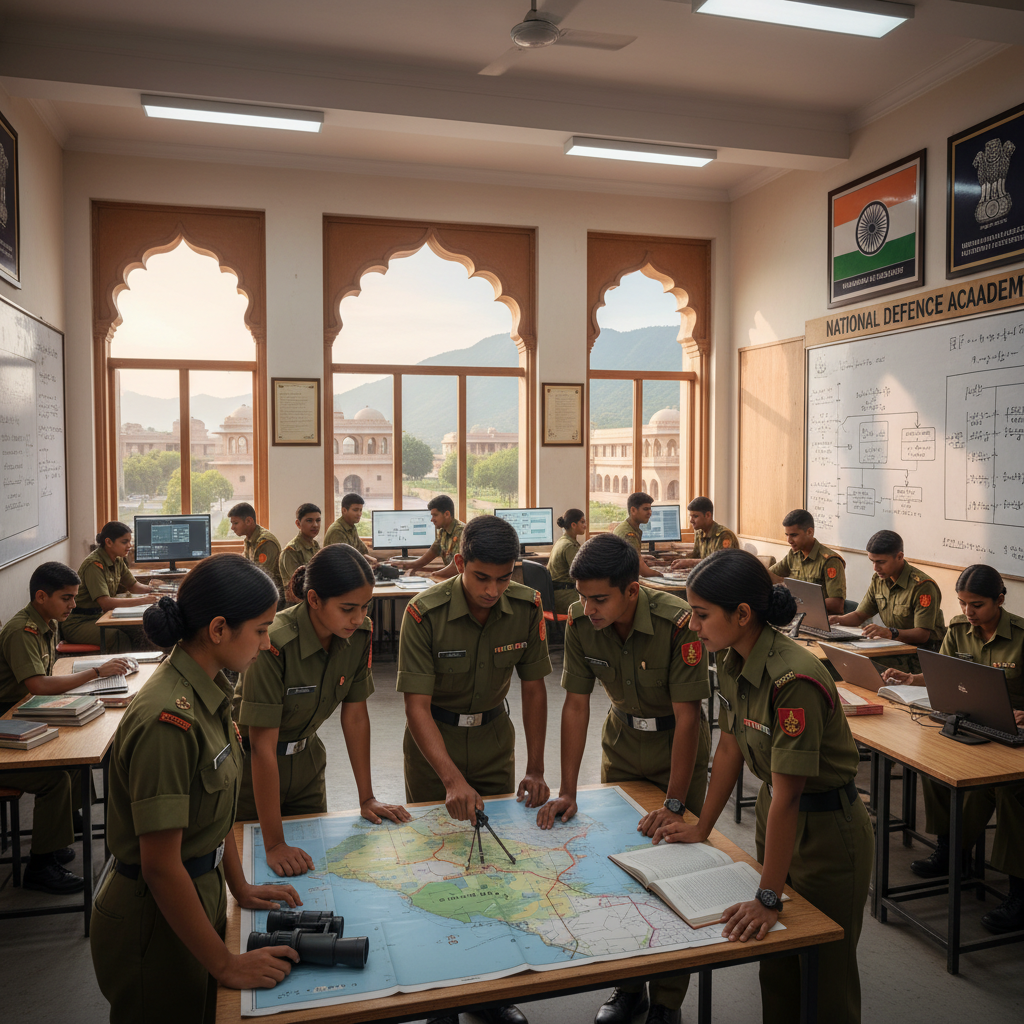
Explore the critical differences between NDA, CDS, and AFCAT in our comprehensive guide, aiding aspirants to choose the right path for a career in the Indian Defence Forces.
Introduction
Choosing between NDA, CDS, and AFCAT can be a daunting task for aspirants looking to forge a career in the Indian Defence Forces. Each of these exams is tailored for a specific segment of candidates and has unique eligibility criteria, training programs, and examination formats. Understanding the nuances of these exams is crucial in deciding which aligns best with your career goals. In this article, we will explore a detailed comparison of NDA, CDS, and AFCAT, emphasizing key differences and insights that you won't find elsewhere.
Overview of NDA, CDS, and AFCAT
NDA (National Defence Academy)
- Target Group: Candidates after Class 12 (Science).
- Training: Integrated military and academic training for the Indian Army, Navy, and Air Force.
- Eligibility:
- Age: 16.5 to 19 years
- Gender: Unmarried male candidates only
- Academic: 10+2 with Physics and Mathematics
CDS (Combined Defence Services)
- Target Group: Graduates aiming for various branches of the Indian Armed Forces.
- Training: Specialized post-graduate training at respective academies (Indian Military Academy, Indian Naval Academy, Air Force Academy, Officer Training Academy).
- Eligibility:
- Age: 19 to 25 years for IMA, 19 to 22 years for INA, and 19 to 25 years for OTA
- Gender: Unmarried male and female candidates
- Academic: Graduation from a recognized university
AFCAT (Air Force Common Admission Test)
- Target Group: Graduates seeking commission in the Indian Air Force as officers across various technical and non-technical branches.
- Training: Specific training based on the role within the Air Force.
- Eligibility:
- Age: 20 to 24 years for non-technical branches, 20 to 26 years for technical branches
- Gender: Both male and female can apply
- Academic: Graduation in relevant fields based on specialization
| Exam | Eligibility Age | Target Group | Training Type |
|---|---|---|---|
| NDA | 16.5 - 19 years | Class 12 Science | Military + Academic |
| CDS | 19 - 25 years (IMA), | Graduates | Post-Graduate |
| 19 - 22 years (INA), | |||
| 19 - 25 years (OTA) | |||
| AFCAT | 20 - 24 years (non-tech), | Graduates | Air Force Role-specific |
| 20 - 26 years (tech) |
Preparation Strategies
NDA Preparation
- Mathematics: Regular practice of previous years' papers is crucial to understand the exam pattern. Common areas include Algebra, Trigonometry, and Calculus.
- General Knowledge: Stay updated with current affairs. Reading newspapers daily and utilizing current affairs magazines will enhance your knowledge base. Consider using a structured approach to capture this information effectively, like the Monthly Current Affairs system.
CDS Preparation
- Subject Specialization: Tailor your study plan according to your graduate qualification. Emphasize the subjects relevant to your degree. For tips on optimizing your schedule, check out The CDS Strategy That Works When You Only Have Evenings.
- Time Management: Create a study timetable prioritizing subjects based on exam weight. Consistent revision is key.
AFCAT Preparation
- Understand the Syllabus: Make a checklist of the syllabus, including sections like General Awareness, Verbal Ability, Numerical Ability, and Reasoning. Familiarize yourself with the specifics by referring to the AFCAT Pattern Decoded.
- Mock Tests: Regular mock tests improve confidence and enhance time management skills.
Common Mistakes and Tips
- Ignoring Physical Fitness: As physical fitness is paramount for all three exams, incorporate daily workouts and physical training into your regimen.
- Neglecting Revision: Make revision a regular part of your study strategy. This prevents last-minute cramming and keeps concepts fresh.
- Underestimating Current Affairs: A strong grasp of current events is essential, especially for CDS and AFCAT. Make it part of your daily study routine.
- Lack of Conceptual Clarity: Focus on understanding concepts rather than rote learning, particularly in subjects like mathematics and science.
Effective Study Plan & Resources
-
NDA Resources:
- Books: NCERT textbooks (up to Class 12) and previous year papers are essential.
- Courses: Enroll in structured courses at coaching institutes such as NDA coaching.
- Coaching: Consider joining a reputable institute for personalized guidance.
-
CDS Resources:
- Books: Look for books specifically crafted for CDS preparation.
- Mock Tests: Use platforms offering mock test series and detailed analysis to assess your preparation levels, like CDS Prep: The Decision Framework Behind Every Topper's Schedule.
-
AFCAT Resources:
- Study Material: Refer to AFCAT-specific preparatory guides and join discussion forums.
- Practice Workshops: Engaging in frequent writing for essays and comprehension can significantly enhance verbal skills.
Key Highlights
- Important Topics to Focus On: Mathematics, General Knowledge, and Current Affairs are critical.
- Effective Revision Formula: Utilize flashcards for regular revision of major topics.
- Exam Strategy: Tackle easier questions first to build confidence during the exam.
- Essential Dos and Don'ts:
- Do: Maintain physical fitness and mental health.
- Don't: Leave preparations for the last minute.
Expert Tip
Visualize your success to boost confidence and reduce exam anxiety. Maintaining a positive mindset can significantly impact performance.
Key Takeaways
- Each of NDA, CDS, and AFCAT offers unique opportunities depending on your educational background and career goals.
- Tailor your preparation strategy according to the exam's format and content.
- Regular revision, physical fitness, and being aware of current affairs are crucial components of effective preparation.
- Join a coaching center, such as AFCAT coaching, for guided support.
FAQs
- What is the primary difference between NDA and CDS?
- NDA caters to students post-Class 12, training together for all three Armed Forces, while CDS is for graduates who undergo training separately at their respective academies.
- Is AFCAT more challenging than CDS?
- Both exams have distinct focus areas. AFCAT includes engineering courses that may be technical, while CDS emphasizes general knowledge and English.
- Can women apply for NDA?
- Currently, NDA is exclusively for male candidates, whereas women can appear for CDS and AFCAT.
- What is the age limit for each exam?
- NDA: 16.5 to 19 years; CDS: 19 to 25 years for IMA, 19 to 22 years for INA, and 19 to 25 years for OTA; AFCAT: 20 to 24 years for non-technical, 20 to 26 years for technical branches.
- How can I enhance my General Knowledge for these exams?
- Regularly read newspapers, utilize news apps, and subscribe to current affairs magazines to stay informed.
- Is it essential to join coaching to succeed in these exams?
- While coaching helps in structured learning, self-discipline and consistent study can also lead to success. Choose an approach that suits your learning style.
Final Summary
Preparing for the NDA, CDS, or AFCAT demands strategic planning, consistent effort, and mental resilience. Choose the pathway that matches your aspirations and commit to it wholeheartedly. Your promising future in the Indian Defence Forces is just around the corner!
📸 Visual Reference

Key Points to Remember
Most Important Topics
Focus on mathematics, general knowledge, and current affairs.
Quick Revision Formula
Revise all major topics weekly using flashcards.
Exam Strategy
Attempt easier questions first to build confidence.
Do & Don't
Do practice physical fitness; don't neglect mental health.
Expert Tip
Stay mentally prepared; visualizing success can boost confidence during the exam.
❓ Frequently Asked Questions
🚀 Revision & Motivation
Start Your Defence Journey Today
Preparing for the NDA, CDS, or AFCAT requires strategic planning, rigorous study, and mental resilience. Choose the path that excites you and pursue it with dedication. Your future in the Indian Defence Forces is within reach!
Understand the differences between NDA, CDS, and AFCAT with our detailed comparison guide, helping you choose the best path for your defence career.