Can You Solve These AFCAT Figure Patterns in Under 30 Seconds?

Master AFCAT Non Verbal Reasoning with effective strategies to solve figure patterns quickly. This guide offers a structured approach to boost your skills and speed.
Can You Solve These AFCAT Figure Patterns in Under 30 Seconds?
Introduction
Excelling in the AFCAT Non Verbal Reasoning segment is vital for aspirants looking to join the Indian Air Force. This section assesses your analytical skills and visual perception, crucial qualities in military roles. In this guide, we will provide insights, effective strategies, and specific timing techniques to help you navigate figure patterns quickly—in under 30 seconds.
Understanding AFCAT Non Verbal Reasoning
What Is It?
The AFCAT Non Verbal Reasoning section evaluates your capability to interpret and manipulate visual information. This may include questions that involve shapes, patterns, and their transformations—each crucial for assessing a candidate's aptitude for strategic decision-making. To deepen your grasp on these skills, refer to our article on Non-Verbal Reasoning: The Visual Pattern Framework for AFCAT.
Importance
Strong skills in non verbal reasoning contribute significantly to cognitive capabilities essential in operational settings. Mastery transforms candidates into logical thinkers and decision-makers—imperatives for success not only in the Indian Air Force but also across other defence branches such as the Indian Army and the Indian Navy. Additionally, a comprehensive understanding can enhance your overall performance in the SSB interview process, where cognitive skills are assessed continuously.
Key Concepts to Master
Understanding these concepts will sharpen your speed and accuracy:
- Pattern Recognition: Identify sequences or progressions in visual elements. Mastering AFCAT Reasoning: The Question Types That Separate Toppers can further enhance your skills here.
- Spatial Understanding: Grasping how figures are arranged in space.
- Analogy and Similarity: Making connections between various visual representations.
- Figure Completion: Determining missing parts of a figure from available options.
Essential Topics for AFCAT Non Verbal Reasoning
| Topic | Description |
|---|---|
| Series Completion | Identifying the next figure in a sequence. |
| Mirror Images | Evaluating how objects would appear in a mirror reflection. |
| Embedded Figures | Finding one shape hidden within another. |
| Paper Folding | Imagining how a flat shape transforms into a three-dimensional figure. |
Proven Preparation Strategy
Steps to Excel
- Understand the Syllabus: Familiarize yourself with each non verbal reasoning topic mentioned above.
- Daily Practice: Dedicate 30-45 minutes each day to tackling non verbal reasoning questions, and consider joining an AFCAT coaching program for structured guidance.
- Mock Tests: Engage in regular mock tests to simulate exam conditions and identify areas for improvement. Explore our insights on AFCAT Reasoning: The Question Types That Determine Your Rank.
- Reflect on Mistakes: Review incorrect answers to pinpoint weaknesses and enhance strategies.
Time Management Techniques
Efficient time management is critical during preparation. Here are strategies to help you:
- Read Questions Carefully: Ensure comprehension before attempting answers.
- Set Time Limits: Allocate specific time for each question to maintain focus and avoid getting stuck.
- Use Elimination Techniques: Narrow down answer choices in multiple-choice questions to increase correctness chances.
Common Mistakes to Avoid
Learner Pitfalls
- Overthinking Questions: Often, the simplest answer is correct.
- Ignoring Mock Tests: They are pivotal for developing time management skills, so integrate mock test practices into your routine.
- Skimming the Basics: Master foundational knowledge before proceeding to more complex content.
Expert Tips for Success
Consistency is paramount. Regular practice not only refines your skills but also gets you accustomed to the question formats you'll face. Daily engagement with different types of questions makes a significant difference.
Structured Study Plan
Suggested Weekly Schedule
- Day 1: Focus on series completion.
- Day 2: Concentrate on mirror image practices.
- Day 3: Solve embedded figures exercises.
- Day 4: Work on paper folding challenges.
- Day 5: Take a mock test centered around non verbal reasoning topics.
- Day 6: Review mistakes and focus on challenging questions.
- Day 7: Recap and revise all learned concepts.
Integration with SSB Interview Preparation
While preparing for AFCAT, remember that SSB (Services Selection Board) interviews will also assess your cognitive skills, particularly during Group Discussions and Personal Interviews. Thus, ensuring proficiency in non verbal reasoning can greatly bolster your overall performance in these evaluations. Moreover, refer to AFCAT Preparation: The Framework That Turns 3 Months Into a Selection for systematic preparation methods.
FAQs
1. How can I swiftly enhance my non verbal reasoning skills?
Regular practice using visual puzzles and targeted mock tests focused on reasoning questions can dramatically improve your skills.
2. What resources can aid my AFCAT non verbal reasoning preparation?
Books dedicated to AFCAT preparation, alongside online platforms, provide a wealth of resources including practice papers and video tutorials. Consult our insights on Numerical Ability: 5 Shortcuts That Turn 2-Minute Problems Into 20 Seconds for additional strategies.
3. How often should I practice non verbal reasoning?
Aim to engage in practice sessions at least 4 times per week to bolster skill retention.
4. Is understanding pattern recognition essential for solving figure patterns?
Absolutely. Recognizing and predicting patterns is at the core of many figure-related questions in non verbal reasoning.
5. What should my focus be in the final week leading up to the AFCAT exam?
Concentrate on revising weak areas and take at least two full-length mock tests to gauge readiness and build confidence.
Key Takeaways
- Mastering non verbal reasoning requires dedicated and consistent practice.
- Effective time management is pivotal for excelling in the actual exam environment.
- A solid understanding of key concepts streamlines problem-solving abilities.
- Mock tests play a critical role in assessing skills and boosting confidence.
- Preparation for both AFCAT and SSB can optimize the chances of success in your defence career.
Final Summary
Success in AFCAT Non Verbal Reasoning lies in your ability to solve figure patterns swiftly and accurately. By implementing a disciplined practice regime and adopting strategic learning methods, you can approach the examination with confidence and competence, setting you on the path to joining the Indian Air Force.
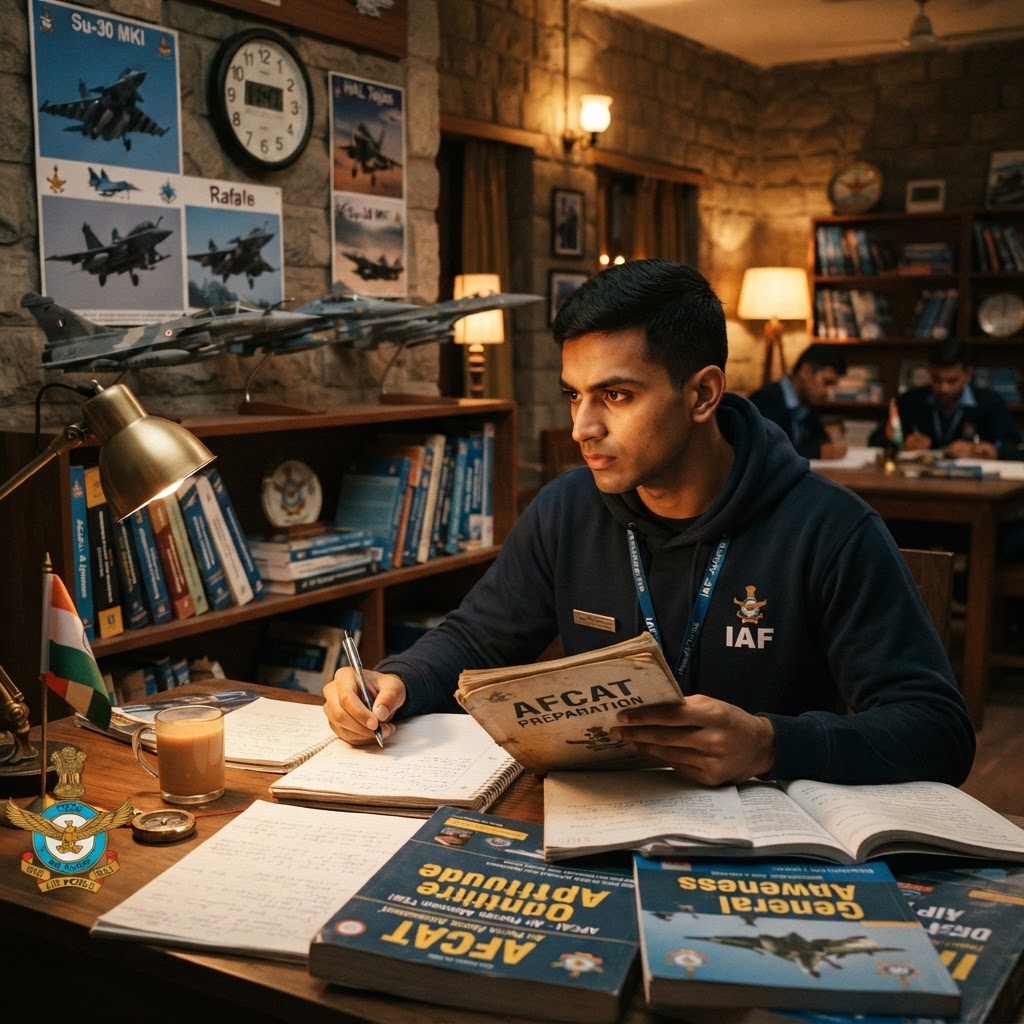
📸 Visual Reference
Key Points to Remember
Most Important Topics
Focus on series completion, paper folding, and embedded figures.
Quick Revision Formula
Use mnemonics and flashcards for effective learning.
Exam Strategy
Prioritize easy questions first to manage your time better.
Do and Don't
Do practice regularly; don't ignore mock tests.
Expert Tip
Be consistent; daily practice leads to improvement.
❓ Frequently Asked Questions
🚀 Revision & Motivation
Start Your Defence Journey Today
Achieving success in AFCAT Non Verbal Reasoning requires consistent practice, strategic learning, and a positive mindset. Embrace the challenge and prepare to soar high in your defence career!
Master AFCAT Non Verbal Reasoning with strategies to solve figure patterns in under 30 seconds. Prepare effectively for your defence exam.